

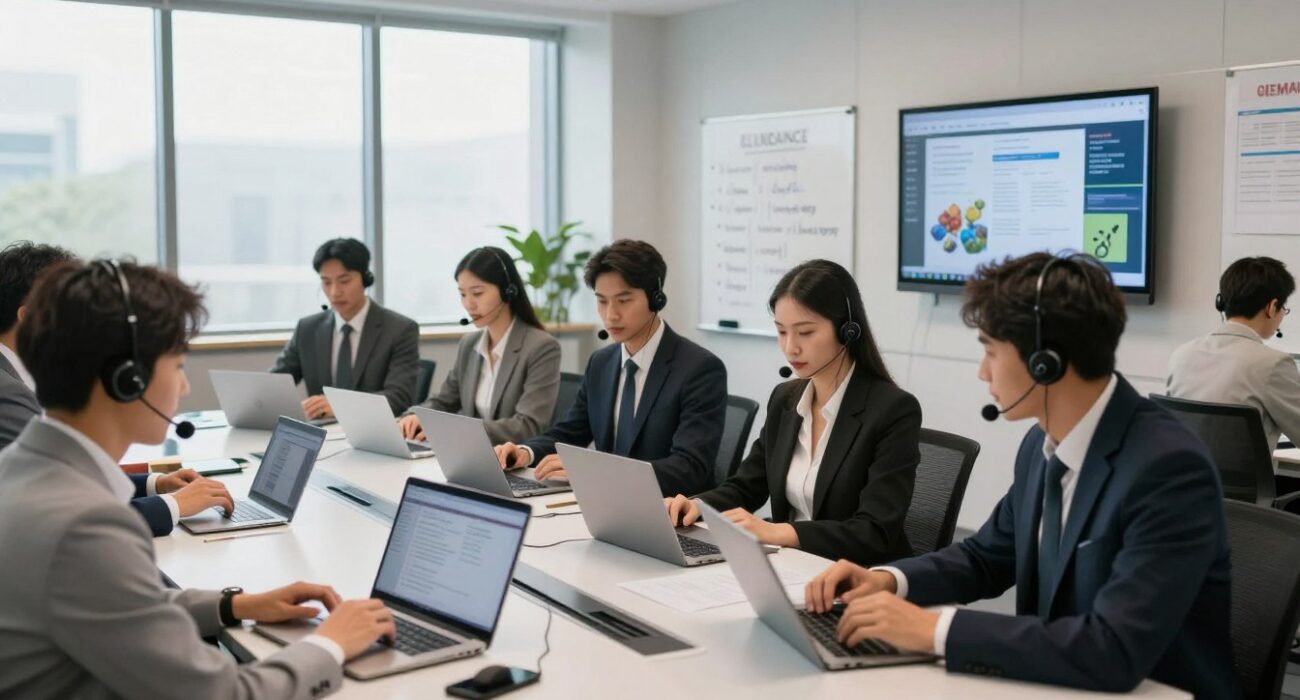
Did you know the average contact center spends over $10,000 and six weeks to prepare a single representative for the phone lines? This lengthy cycle directly impacts your bottom line and customer satisfaction.
Traditional onboarding methods often fail to keep pace with today’s dynamic service environment. They leave teams struggling with knowledge gaps and inconsistent performance.
Modern, strategic approaches to development can transform this costly process. They slash time-to-proficiency while boosting key metrics.
This comprehensive guide delivers actionable methods to accelerate your program. We focus on building competency and confidence rapidly.
You will discover blended learning techniques and data-driven coaching. These methods create personalized pathways for each team member.
The result is a more productive workforce that delivers exceptional service from day one. This article provides the blueprint to achieve those results.
Introduction: The High-Stakes Need for Faster, Smarter Training
Industry benchmarks reveal a staggering reality: contact centers typically see nearly one-third of their workforce depart annually. This constant churn creates immense pressure to onboard staff quickly without sacrificing service quality.
Traditional development methods often fail in this environment. They leave gaps in practical skills and miss opportunities to use existing team expertise.
Rising customer expectations demand representatives who handle complex situations with both empathy and expertise. People now expect seamless, knowledgeable service across every touchpoint.
The financial impact of slow preparation is substantial. Extended time-to-proficiency hurts operational costs and satisfaction metrics simultaneously.
Modern consumers interact through multiple channels. They require team members to master diverse communication platforms and advanced problem-solving techniques.
This guide addresses these critical challenges directly. It presents innovative strategies that accelerate learning while improving retention and performance outcomes.
We will explore how combining technology with proven methodologies transforms every customer interaction. Each conversation becomes a coaching opportunity for growth.
The introduction sets the stage for understanding why evolution is essential. Moving beyond basic scripts and sporadic feedback sessions is no longer optional for competitive operations.
By implementing the approaches outlined here, organizations can break the cycle of constant replacement. They build a more engaged workforce that delivers exceptional experiences consistently.
Lay the Foundation: Strategic Pre-Training and Onboarding
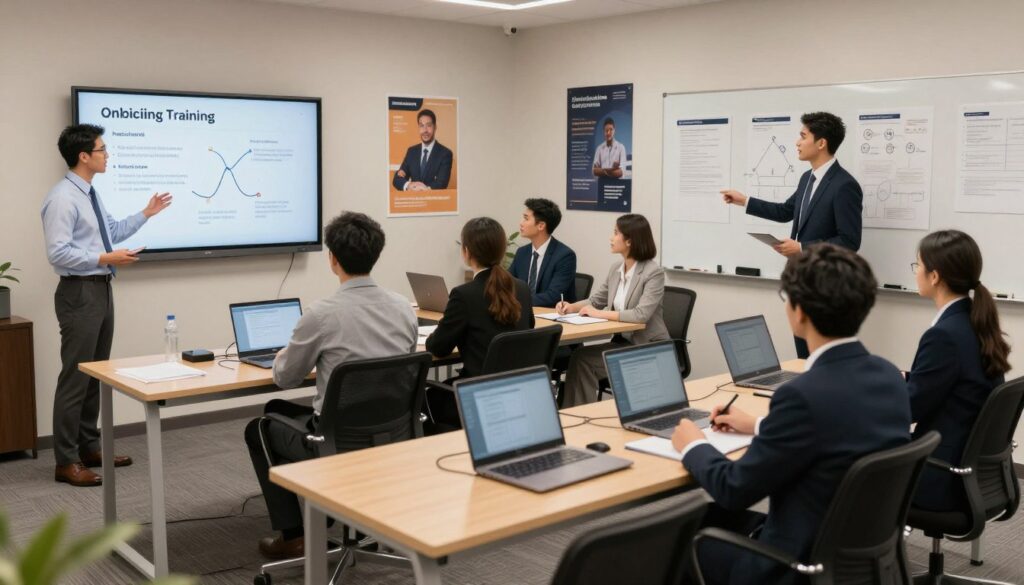
Strategic groundwork transforms the chaotic first weeks into a structured pathway toward proficiency. This initial phase determines how quickly staff members achieve competence and confidence.
A solid foundation addresses three critical elements before live interactions begin. These elements create alignment between organizational needs and individual capabilities.
Companies that invest in comprehensive preparation see remarkable results. They experience shorter learning curves and improved performance metrics.
Industry studies confirm lower turnover among hires who receive structured support. This section outlines the essential components of an effective foundation.
Develop Clear KSAC Profiles for Each Role
Precision begins with defining what success looks like for every position. KSAC profiles establish exact requirements for knowledge, skills, abilities, and culture.
These profiles serve as blueprints for both recruitment and development programs. They ensure alignment between hiring criteria and skill-building objectives.
Practical knowledge requirements include industry-specific expertise and product details. Measurable skills cover service proficiencies and technical competencies.
Demonstrated abilities encompass empathy, active listening, and task switching. Cultural alignment focuses on organizational values and communication styles.
Clear profiles help managers identify gaps during the preparation process. They provide a roadmap for personalized development from day one.
Implement a Structured, Multi-Phase Onboarding Program
Systematic introduction prevents overwhelming feelings that contribute to poor retention. Research shows methodical approaches significantly reduce early attrition rates.
Effective programs begin with pre-onboarding materials sent before the start date. Welcome packets introduce company mission statements and strategic goals.
Letters from leadership explain organizational purpose and customer commitments. This early exposure helps hires understand the broader business landscape.
The first week typically includes meetings with department heads and team leaders. These sessions clarify how different functions collaborate to support clients.
Classroom instruction combines with shadowing experiences for balanced learning. Gradual responsibility increases build confidence without creating stress.
Hires transition from observation to supervised practice before handling live inquiries. This phased approach creates competence systematically rather than through trial by fire.
Select the Right Call Center Software from Day One
Technological tools directly impact efficiency and service quality. Proper systems enable representatives to focus on communication rather than navigation.
Modern platforms should integrate several key functionalities seamlessly. These include customer relationship management and knowledge base access.
Real-time analytics provide immediate insight into interaction quality. Supervisor dashboards allow for timely support and intervention when needed.
Implementation requires thorough testing before staff members begin using systems. Regular updates ensure optimal performance as business needs evolve.
Representatives equipped with intuitive tools resolve issues more efficiently. They spend less time searching for information and more time engaging with people.
The right technology foundation supports all subsequent skill development. It transforms complex processes into manageable, streamlined workflows.
Adopt a Blended & Accelerated Learning Methodology
The most effective development programs combine social interaction, digital flexibility, and continuous reinforcement in one cohesive system. This blended approach addresses diverse learning preferences while accelerating knowledge acquisition.
Traditional single-format instruction often fails to engage modern support teams fully. A multifaceted educational ecosystem delivers information through multiple channels that reinforce each other.
Each component serves a specific purpose in the competency-building process. Classroom sessions provide social learning and immediate feedback opportunities.
Digital tools offer just-in-time information access during actual customer interactions. Microlearning modules fill knowledge gaps without disrupting daily workflow.
Incorporate Engaging, Interactive Classroom Sessions
Transform passive lectures into active “entertrainment” experiences that boost information absorption. Interactive sessions use games, stories, and role-playing exercises to demonstrate real-world scenarios.
These methods capture attention more effectively than traditional presentations. They reduce stress while significantly improving material retention among adult learners.
Videos showcase ideal interaction techniques and common pitfalls to avoid. Facilitated discussions encourage team members to share perspectives and problem-solving approaches.
This social learning environment builds camaraderie while reinforcing core concepts. Representatives practice soft skills in a safe setting before facing actual customers.
Utilize Microlearning for Bite-Sized Knowledge Reinforcement
Deliver content in short, focused modules that staff can complete between calls or during breaks. These micro-lessons typically last three to seven minutes and address single learning objectives.
Artificial intelligence capabilities enable targeted delivery when specific performance gaps are detected. The system identifies areas needing improvement and serves relevant content automatically.
This strategy aligns perfectly with modern attention spans and work patterns. It allows continuous skill development without overwhelming team members with lengthy sessions.
Microlearning supports just-in-time knowledge application during live interactions. Representatives quickly access specific information needed for immediate customer issues.
Leverage Knowledge Bases and Self-Service Tools
Create centralized repositories containing company data, learning resources, and approved response scripts. These systems provide instant answers to common questions during customer engagements.
Internal knowledge management platforms like Zoho Desk, Guru, and HubSpot integrate seamlessly with existing CRM tools. They deliver context-specific information based on the current interaction.
These resources enable flexible learning channels accessible anywhere at any time. Team members consult self-help guides, audio tutorials, or video demonstrations according to personal preference.
Mobile-accessible content supports learning during commute times or outside traditional hours. This accessibility accommodates different schedules and reinforces key concepts continuously.
The blended methodology creates a comprehensive learning ecosystem that accelerates proficiency. Information presented through multiple modalities caters to various learning styles within your team.
This approach improves retention rates while reducing time-to-competence significantly. Your organization benefits from more confident, capable representatives delivering exceptional customer experiences.
Leverage AI and Analytics for Data-Driven Coaching

Modern analytics platforms unlock unprecedented visibility into team performance. They move development beyond guesswork to evidence-based guidance.
Artificial intelligence transforms traditional methods by converting every conversation into measurable data. This creates a continuous feedback loop for professional growth.
These technologies analyze communication patterns at scale. They reveal hidden insights for targeted skill enhancement across your organization.
The combination creates an ecosystem where each customer engagement contributes to development. Supervisors gain actionable intelligence rather than vague impressions.
Implement Speech Analytics for Real-Time Insight
Speech analytics technology provides immediate awareness of service issues as they occur. It alerts supervisors to inefficiencies across the entire operation.
This enables proactive coaching during or immediately after customer interactions. Managers can address specific challenges with personalized interventions.
The software monitors tone, pace, and keyword usage in real conversations. It identifies patterns that indicate frustration or confusion.
Real-time alerts help representatives adjust their approach while still engaged with people. This prevents minor issues from escalating into major problems.
These tools transform every dialogue into a coaching moment. They provide concrete examples rather than abstract advice for improvement.
Use Success Intelligence to Learn from Top Performers
Success Intelligence involves monitoring consistently successful staff members. It uncovers proven techniques for handling common objections and difficult situations.
This approach moves beyond generic best practices to data-validated methods. These strategies actually work in real customer scenarios.
Advanced tools analyze what distinguishes top performers from average ones. They identify specific language patterns and problem-solving approaches.
The insights become training examples for the entire team. Struggling representatives receive actionable strategies from proven colleagues.
This method helps agents convert insights into practical skills. It bridges the gap between knowing what to do and actually doing it effectively.
Enhance Quality Assurance with AI-Assisted Reviews
AI-powered quality assurance transforms traditional manual processes. It enables assessment of more interactions with greater consistency than human review alone.
Traditional methods typically cover only small call samples due to time constraints. Automated systems can evaluate thousands of conversations systematically.
These tools identify compliance issues before they escalate. They use keyword searches and pattern recognition across entire communication histories.
Quality teams uncover potential risks and coaching opportunities that manual methods miss. This significantly shortens feedback loops that often delay improvement.
Data-driven coaching shifts from vague opinions to specific, actionable feedback. It’s based on actual performance metrics and conversation patterns identified through analytics.
The technology helps create a comprehensive evaluation system. It ensures every team member receives fair, consistent assessment based on objective criteria.
Personalize the Training Experience for Each Agent
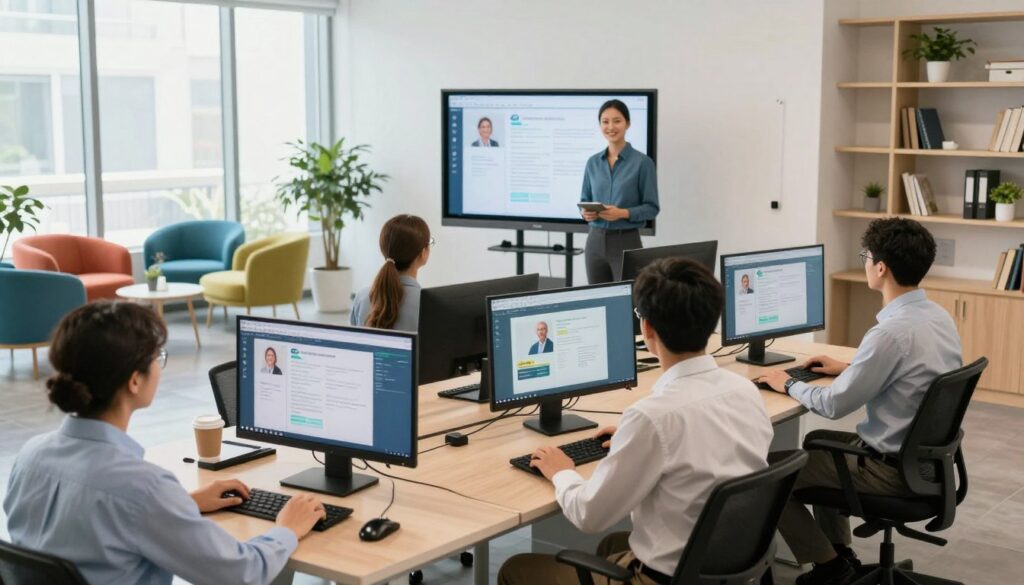
The most impactful skill development occurs when programs adapt to the person rather than forcing people to adapt to programs. Generic approaches often fail to address individual strengths and knowledge gaps effectively.
Customized preparation acknowledges that each staff member enters with different experience levels. It builds on existing competencies while addressing specific areas for improvement systematically.
This tailored methodology increases engagement and accelerates proficiency. Representatives feel their unique needs are valued, which boosts motivation and retention.
Organizations benefit from higher quality customer interactions when development is individualized. Team members apply learned skills more confidently during actual service scenarios.
Tailor Content to Individual Learning Styles
People absorb information through different sensory channels. Effective programs offer content in multiple modalities rather than relying on one delivery method.
Visual learners benefit from diagrams, flowcharts, and video demonstrations. Auditory preferences respond well to podcasts, discussions, and verbal explanations.
Kinesthetic approaches involve hands-on practice and interactive simulations. Reading/writing styles favor manuals, articles, and note-taking activities.
Management teams should assess how each representative learns best. This assessment informs how material is presented for different topics and objectives.
Adapting delivery to preferences improves knowledge retention significantly. Staff members grasp complex concepts more quickly when information matches their natural processing style.
Modern learning management systems can track engagement across formats. This data helps identify which approaches work best for specific individuals.
Create Personalized Learning and Career Pathways
Development trajectories should align with individual career aspirations. They must also meet organizational competency requirements for each role.
This approach gives employees ownership over their professional growth. It connects daily preparation activities to long-term career objectives directly.
Personalized pathways acknowledge different baseline knowledge and skill sets. Customized plans address these variations rather than using standardized curricula.
Recognition programs integrated into this framework provide tangible appreciation. They guide staff toward specific goals while reinforcing individual accomplishments.
Data from performance analytics informs personalization decisions effectively. It identifies knowledge gaps or strength areas for each team member.
Pathways might include specialized certifications or cross-training opportunities. Leadership development tracks and technical specialization suit different interests.
This personalized approach produces happier, more engaged representatives. Industry research confirms higher performance when unique needs are supported.
The business benefits from improved customer satisfaction and key performance metrics. Employees feel valued, which reduces turnover and builds institutional knowledge.
Focus on Core Competencies: Beyond Basic Scripts

The foundation of exceptional customer service lies in mastering both technical knowledge and human connection skills. Moving beyond scripted responses requires developing comprehensive competencies that transform representatives into true problem-solving partners.
These core abilities enable staff to handle diverse scenarios with confidence and competence. They create memorable experiences that build loyalty and trust.
Deep Product, Service, and Process Knowledge
Thorough understanding goes far beyond basic feature awareness. It encompasses specifications, benefits, use cases, and troubleshooting procedures.
This comprehensive education enables confident assistance during customer interactions. Representatives become perceived as knowledgeable experts whom people trust to resolve concerns.
Deep product knowledge significantly improves the overall customer experience. It reduces repeat contacts and increases first-contact resolution rates.
Process mastery ensures efficient navigation through company systems and protocols. This technical expertise complements interpersonal abilities for complete service delivery.
Cultivating Emotional Intelligence and Empathy
Emotional intelligence involves recognizing and responding appropriately to customer emotional states. This skill is particularly crucial during frustrating or challenging interactions.
Sentiment analysis tools provide valuable insights for teaching these techniques. They identify conversations that began negatively but ended positively through effective engagement.
These real examples demonstrate what actually works in practice. They help agents develop sensitivity and adjust their approach based on emotional cues.
Empathy often trumps strict handling time metrics during emotional exchanges. Allowing conversations to proceed at the customer’s pace builds rapport and understanding.
Mastering De-escalation for High-Stress Interactions
High-pressure situations require specific techniques for staying calm and focused. Active listening strategies and problem-solving approaches are essential for these scenarios.
Realistic role-playing exercises build muscle memory for challenging customer interactions. They ensure staff have practiced responses ready rather than freezing under pressure.
These exercises should simulate the most difficult situations representatives might encounter. Regular practice transforms anxiety into preparedness and professional competence.
De-escalation skills protect both customer relationships and representative well-being. They turn potential conflicts into opportunities for service recovery and loyalty building.
Comprehensive competency development addresses both technical knowledge and human skills. This creates well-rounded agents capable of handling complex needs across diverse situations.
The result is a team that delivers consistent, high-quality service regardless of circumstance. These core competencies form the bedrock of sustainable customer satisfaction and business success.
Train for Modern Customer Engagement: Multi-Channel Proficiency
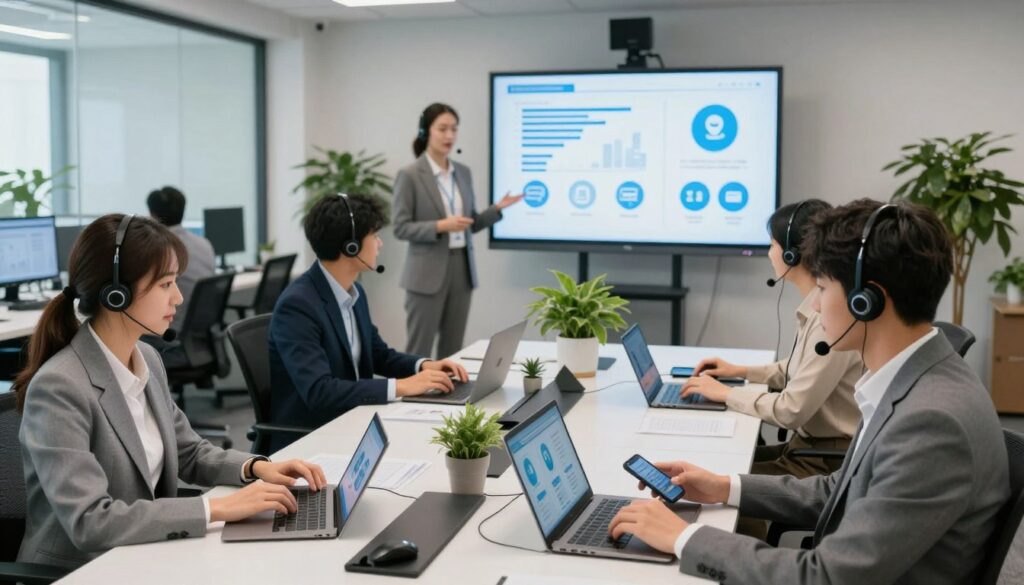
The digital age has shattered the single-channel service model. It creates complex customer journeys that weave through multiple touchpoints.
Modern engagement requires fluency across voice, email, live chat, and social media. Each platform has distinct communication norms and technical requirements.
People increasingly switch between channels during single issue resolutions. They expect seamless transitions and consistent information regardless of method.
Preparation must address different writing styles and response time expectations. It maintains uniform service quality across all communication points.
Multi-channel proficiency includes knowing when to escalate from digital to voice. Staff must maintain conversation context when customers switch methods.
Technical education on each platform’s interface is essential. This includes shortcut commands and integration with customer relationship systems.
Communication style adaptation proves crucial for success. The conversational tone for phone differs from email’s concise professionalism.
Chat platforms demand informal efficiency while maintaining brand voice. Social media requires public-facing diplomacy and rapid response.
Practice scenarios should simulate cross-channel customer journeys. They prepare staff for interactions that rarely follow single paths.
This comprehensive approach ensures representatives meet people wherever they engage. It delivers consistently excellent service that builds brand loyalty.
Organizations investing in multi-channel preparation report measurable benefits. They see higher satisfaction scores and improved first-contact resolution.
Team confidence grows when handling diverse customer preferences. The business gains competitive advantage through superior engagement capabilities.
Foster a Culture of Continuous Learning and Feedback
A thriving support organization depends on more than initial preparation—it requires an environment where growth never stops. This cultural shift transforms skill development from a compliance requirement to a valued opportunity.
When team members feel safe to ask questions and receive guidance, performance improves consistently. The entire business benefits from this ongoing commitment to excellence.
Effective cultures treat education as an embedded process rather than a one-time event. They incorporate regular upskilling sessions and peer coaching opportunities.
This approach keeps staff engaged and adaptable to changing customer needs. It builds institutional knowledge that strengthens service quality over time.
Establish Short, Actionable Feedback Loops
Immediate guidance ensures coaching occurs close to the actual performance. Managers should provide reinforcement when representatives excel and timely correction when they struggle.
This proximity to the event maximizes learning retention significantly. The feedback becomes more relevant and easier to apply.
Effective guidance should be specific and actionable rather than vague. Focus on observable behaviors and measurable outcomes that staff can implement directly.
For example, instead of saying “be more empathetic,” suggest specific language patterns. This gives people concrete tools for their next customer interaction.
Short loops prevent small issues from becoming ingrained habits. They create momentum for continuous improvement across the entire team.
Create Safe Spaces for Agent Feedback and Questions
Establish channels where team members can share insights without fear of negative consequences. Discussion forums and regular check-in webinars work well for this purpose.
Anonymous feedback mechanisms also encourage honest communication. People often have valuable perspectives they hesitate to share openly.
Representatives on the front lines hear customer comments before anyone else. Their insights prove invaluable for improving both content and overall service quality.
When properly captured and utilized, this information drives meaningful change. It helps align organizational practices with actual customer expectations.
Safe spaces foster trust and demonstrate that leadership values employee input. This increases engagement and reduces turnover in the long term.
Build a Library of Real Call Examples for Reference
Archive both positive and challenging customer interactions as educational materials. These real examples serve as powerful tools for new and existing team members.
Concrete demonstrations show proven techniques for resolving various issues. They set realistic expectations for the types of situations staff will encounter.
Libraries should include conversations that began negatively but ended positively. These examples demonstrate effective de-escalation and problem-solving in action.
Regularly updated collections keep content relevant as customer needs evolve. They provide a shared knowledge base that everyone can access.
Post-education evaluation surveys offer anonymous input from learners themselves. This feedback provides invaluable insights for keeping programs effective.
When representatives actively participate in and contribute to their development, motivation increases. The entire organization moves toward sustainable excellence together.
Implement Powerful Peer Support and Mentorship
The most valuable teaching often comes not from formal instructors but from colleagues who have mastered the role. This peer-to-peer wisdom transforms theoretical knowledge into practical excellence.
Structured mentorship creates a living network where expertise flows naturally. It supplements classroom instruction with real-world context that accelerates competency.
Organizations implementing these programs see remarkable improvements. They achieve shorter learning periods and stronger retention of both information and personnel.
The approach formalizes what might otherwise remain informal tribal knowledge. It ensures consistent guidance for every team member joining the organization.
Connect New Hires with Skilled Mentor Agents
Pairing incoming staff with experienced guides creates immediate support systems. These relationships extend beyond initial preparation into ongoing development.
Successful initiatives report measurable benefits across key metrics. They include increased performance numbers and reduced turnover among recent additions.
Mentor selection requires careful consideration beyond simple performance rankings. The ideal guide combines several essential qualities:
- Personable demeanor that puts learners at ease
- Dependable consistency in both attendance and guidance
- Autonomous problem-solving abilities to model best approaches
- Patient teaching style that accommodates different learning paces
Top performers may excel individually but lack the coaching aptitude needed for mentorship. The teaching role demands different skills than direct customer interaction.
Formal programs recognize mentor contributions through various means. These often include leadership titles, skill reinforcement opportunities, and additional compensation.
Structured mentorship ensures consistent knowledge transfer and reduces reliance on individual initiative for learning undocumented best practices.
These relationships benefit both participants in meaningful ways. Guides reinforce their own abilities through teaching, while learners gain practical insights.
Research confirms that operations with extensive mentoring achieve better retention rates. They also develop internal leadership pipelines from their mentor populations.
Utilize Shadowing and Talk-and-Type Practice
This hands-on method develops crucial multitasking abilities essential for live environments. It bridges the gap between theoretical understanding and practical application.
The practice begins with learners observing while experienced colleagues handle conversations. During this phase, newcomers navigate systems and document interactions.
Roles gradually reverse until staff master both components simultaneously. This progressive approach builds confidence through controlled exposure.
The technique creates muscle memory for the complex coordination required. Representatives learn to listen, speak, and navigate software all at once.
This preparation proves particularly valuable during high-pressure situations. Staff develop automatic responses that maintain service quality under stress.
Effective implementation follows a clear progression:
- Observation phase with system navigation responsibility
- Guided practice with mentor providing real-time feedback
- Role reversal with mentor observing and coaching
- Independent handling with mentor available for questions
Each stage addresses specific competency development needs. The structured approach prevents overwhelm while ensuring comprehensive skill acquisition.
These peer support mechanisms create organic knowledge networks within the business. They provide context-specific guidance from those who successfully perform the work daily.
The result is a more cohesive, capable workforce that delivers exceptional customer experiences. Peer relationships become the backbone of continuous improvement and sustained excellence.
Gamify Training to Boost Engagement and Retention
What if skill development felt less like mandatory education and more like an engaging challenge? Gamification answers this question by applying game mechanics to professional growth. It transforms routine preparation into a dynamic experience that staff eagerly participate in.
This approach uses elements like leaderboards, achievement levels, and digital badges. Point systems and reward structures create friendly competition among colleagues. The psychology of achievement offers powerful tools for enhancing learning outcomes.
Effective implementation goes beyond simple scoreboards. It creates environments where people compete with themselves and others simultaneously. Individuals strive to beat their personal best records while contributing to team success.
Game elements must align with specific learning objectives. “Winning” should correspond directly to improving actual job abilities. This ensures that playful competition drives meaningful professional development.
Gamification makes continuous improvement a visible, celebrated process rather than an abstract concept discussed only during formal reviews.
These systems tap into natural competitive instincts. They make skill acquisition more enjoyable and personally rewarding. Engagement increases when education feels like an accomplishment rather than an obligation.
Well-designed programs balance individual and team competitions. This approach builds both personal capability and collaborative cohesion. Representatives feel motivated by their own progress and their group’s achievements.
Progressive leveling systems can mirror career advancement pathways. Staff visualize their growth trajectory clearly. They understand what competencies they need for next-level performance.
Gamification drives long-term behavioral change effectively. It integrates improvement into daily work rather than separating it from job performance. People actively pursue development as part of their regular responsibilities.
Proper implementation produces happier, more engaged team members. Research indicates significant improvements in knowledge retention. Skill application and completion rates increase compared to traditional instructional methods.
The business benefits from this enhanced engagement. Customer satisfaction often rises when representatives are motivated and skilled. Service quality improves as staff apply learned techniques consistently.
These game-based approaches work across various preparation contexts. They enhance onboarding for recent hires and ongoing education for experienced personnel. The methodology adapts to different learning paces and styles.
Organizations should start with clear objectives and measurable outcomes. Reward systems should recognize both effort and achievement. Regular updates keep the experience fresh and relevant for all participants.
Gamification represents a strategic shift in how we approach professional development. It acknowledges that motivation matters as much as methodology. When education becomes engaging, everyone wins—the business, the team, and the customers they serve.
Measure, Analyze, and Iterate on Training Effectiveness
Without concrete data to guide decisions, even the most well-intentioned development initiatives risk becoming exercises in hope rather than instruments of change. Systematic measurement transforms preparation from a static event into a dynamic process.
This evolution ensures programs evolve alongside shifting business needs. It connects educational investments directly to performance outcomes.
Organizations that master this discipline consistently outperform their competitors. They achieve superior operational efficiency and stronger customer relationships.
Three core practices create this continuous improvement cycle. They establish clear benchmarks, foster self-assessment, and provide unbiased external evaluation.
Define and Monitor Key Performance Indicators (KPIs)
Measurable benchmarks establish what success looks like for your operation. They focus attention on metrics that matter most to organizational objectives.
Common indicators include first-contact resolution rates and satisfaction scores. Average handling time and quality assurance ratings also provide valuable insights.
These measurements should serve as development tools rather than mere evaluation metrics. Staff members routinely compare performance indicators to specific actions.
This comparison helps people manage their own growth within their roles. It creates ownership over professional development and daily outcomes.
Effective monitoring requires regular review sessions with supervisors. These discussions connect numbers to real-world behaviors and techniques.
Encourage Agent Self-Scoring and Performance Analysis
Self-assessment skills enable continuous improvement without constant supervisor oversight. This practice involves having personnel evaluate their own conversations.
Quality assurance forms provide excellent templates for this exercise. They offer structured frameworks for objective evaluation.
Staff apply these forms to live interactions or recorded practice sessions. They learn to analyze their own delivery critically.
This process helps individuals make rapid adjustments without waiting for managerial feedback. It builds critical thinking abilities essential for complex service situations.
When representatives become skilled at self-evaluation, they transform from passive recipients of coaching to active architects of their own professional growth.
The practice develops metacognition—the ability to think about one’s own thinking. This higher-order skill separates competent performers from exceptional ones.
Conduct Regular Checks with Mystery Shoppers
Trained evaluators pose as customers with various problems to assess daily handling quality. These secret shopper evaluations provide unbiased insight into actual service delivery.
They reveal gaps between classroom concepts and practical application. The assessments identify areas where additional guidance or curriculum adjustments prove necessary.
Effective mystery shopping programs follow several key principles:
- Varied scenarios that test different competencies and situations
- Consistent evaluation criteria applied across all assessments
- Timely feedback delivered while experiences remain fresh
- Constructive reporting that focuses on improvement opportunities
These evaluations complement internal quality monitoring systems. They offer external perspectives that internal teams might overlook.
Regular measurement creates feedback loops connecting development investments to actual results. This enables data-driven decisions about resource allocation.
Analysis should identify patterns across personnel and time periods. It reveals systemic issues requiring program-level adjustments rather than individual solutions.
Iterative improvement based on measurement data ensures preparation evolves. It keeps pace with changing expectations and technological advancements.
Organizations that systematically measure, analyze, and iterate achieve sustainable advantages. They build operations where every educational dollar delivers maximum impact.
The final section explores how these practices combine to create lasting competitive superiority through superior development.
Conclusion: Building a Sustainable Advantage Through Superior Training
The true measure of effective preparation lies in its ability to create virtuous cycles of improvement. These cycles benefit customers, staff, and the business simultaneously.
Investing in comprehensive development transforms a cost center into a value generator. Organizations see measurable outcomes like 15% higher satisfaction scores and 50% quicker onboarding. Early attrition drops by nearly one-third.
Technology platforms combine microlearning with real-time performance visibility. This approach personalizes growth through data-driven insights. It builds engaged, high-performing teams.
Leaders who embrace these methodologies break the cycle of constant replacement. They establish foundations for sustainable success in today’s service landscape. The future belongs to operations that make development their strategic advantage.